This art is not afraid of heights…
This art is not afraid of heights…
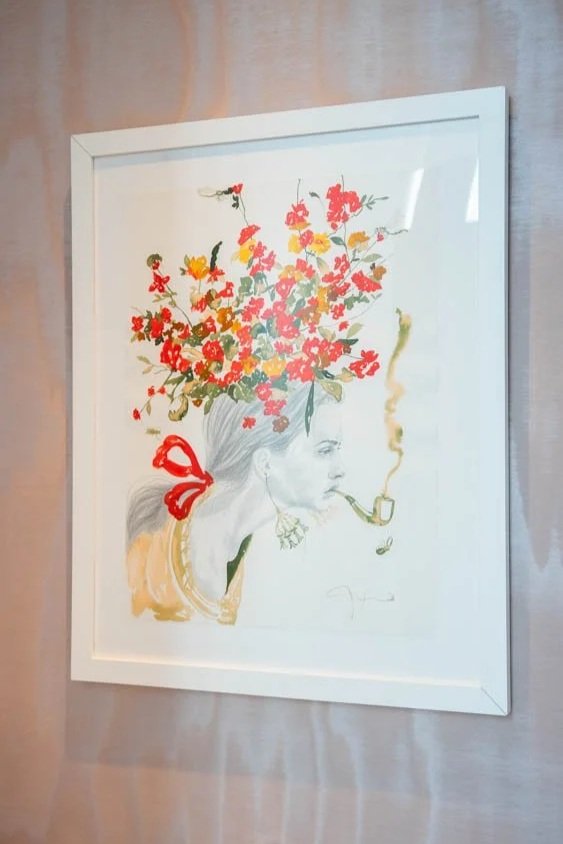
This artwork is a watercolor, ink, and graphite piece by Cuban-American artist Carlos Gamez de Francisco.
The title "Ceci n'est pas une Pipe" (French for "This is not a pipe") is a direct reference to René Magritte’s famous 1929 painting The Treachery of Images. Magritte’s original work challenged the viewer's perception of reality by pointing out that a painting of a pipe is not the actual object itself—you cannot smoke it.
The surrealist painting features a female portrait with vibrant red flowers emerging from her head. It incorporates gold-leaf elements and is part of a series often exploring themes of fashion, nature, and distorted reality.
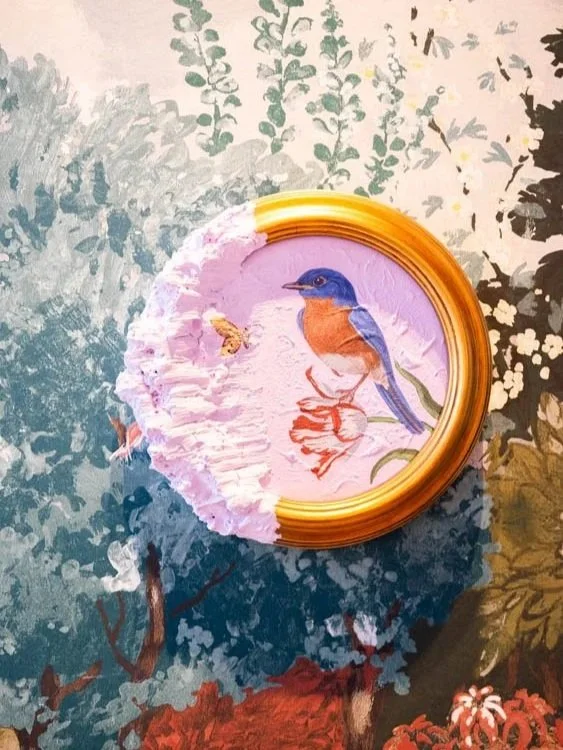
Blue Bird
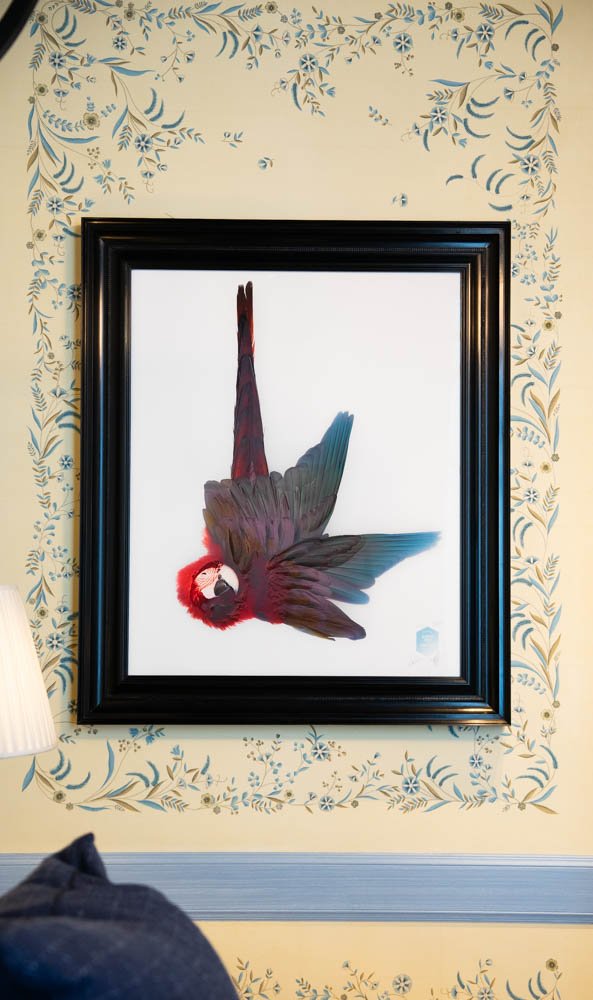
Unknown Pose by Green-winged Macaw
This artwork is titled "Unknown Pose by Green-winged Macaw" (or sometimes referred to as Scarlet Macaw) and is part of the "Unknown Poses" collection by the Dutch artist duo Darwin, Sinke & van Tongeren
The "Unknown Poses" series captures bird, reptile, and animal skins floating in a soapy water bath during the taxidermy preparation process
While floating, the "empty" skins appear to be revived, performing what the artists describe as a "graceful water ballet". This creates unique, abstract compositions that would be impossible to achieve with live or traditionally mounted animals. The artists practice "ethical taxidermy," using only animals that have died of natural causes
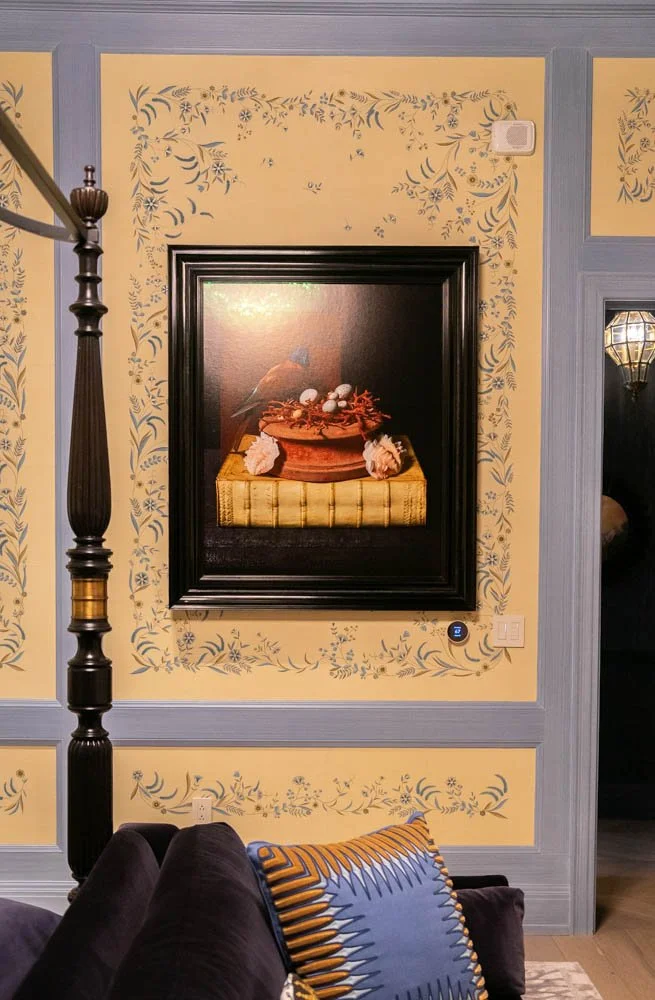
This artwork is titled Je Me Vais Sacrifier (I am going to sacrifice myself), created by the Dutch fine taxidermy and artist duo Darwin, Sinke & van Tongeren
The piece is part of their photographic collection titled Les Peintures des Taxidermistes, which replicates the aesthetic of 17th-century Dutch Vanitas and still life masterpieces using meticulously styled, real taxidermy elements
An old parchment-covered book serves as the base for a nest constructed from blood coral segments. A variety of fragile bird eggs differing in color, pattern, and size rest inside. A taxidermied Bee-eater sits beside the nest acting as a "governess," committed to caring for a progeny belonging to entirely different bird species.
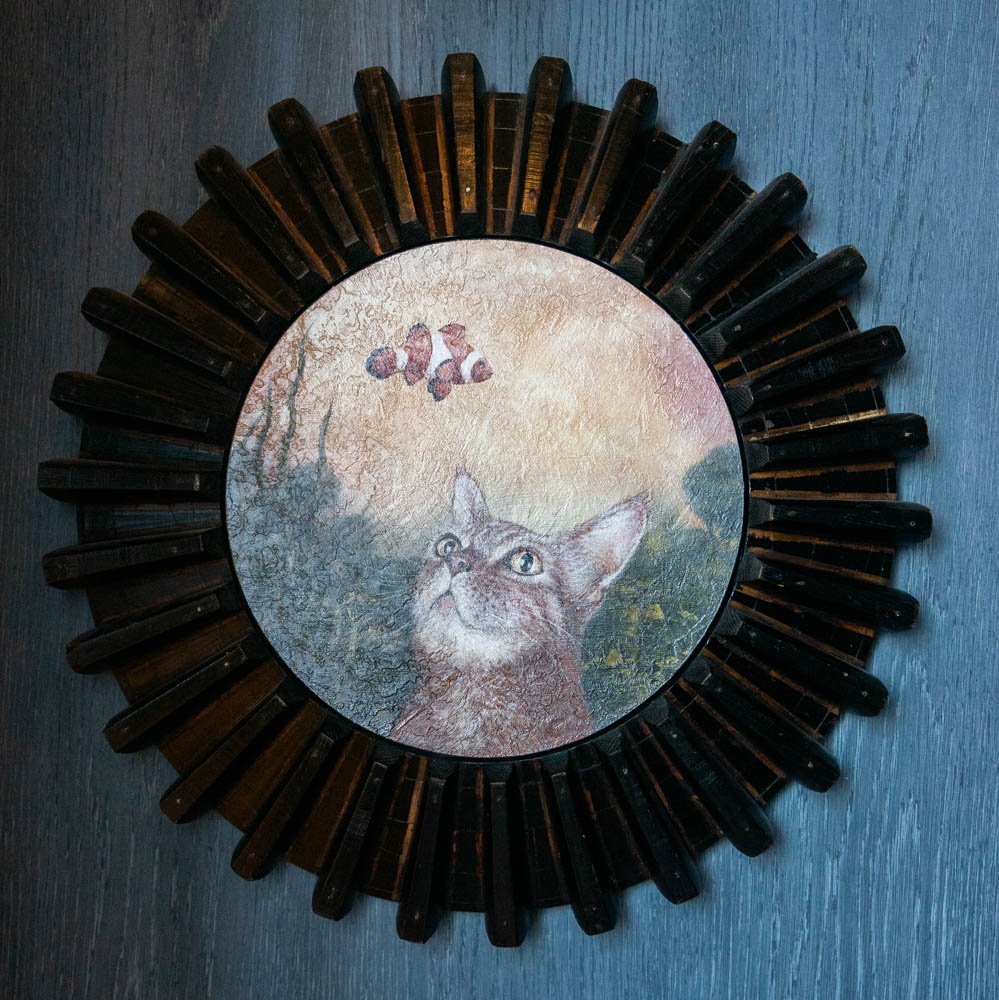
Catfish
"Catfish" is a whimsical, surrealist painting by American contemporary artist Tyson Grumm.
This piece perfectly reflects Tyson Grumm's unique style, which frequently depicts storybook-like, dream-inspired worlds where animals interact with unexpected objects or step into humanized, prioritize roles.
A hallmark of Grumm’s physical work is his dedication to presentation. He hand-collects and reworks vintage or industrial objects—such as this dark, segmented wooden foundry pattern gear—to serve as custom frames that transform each canvas into an integrated, sculptural object of wonder
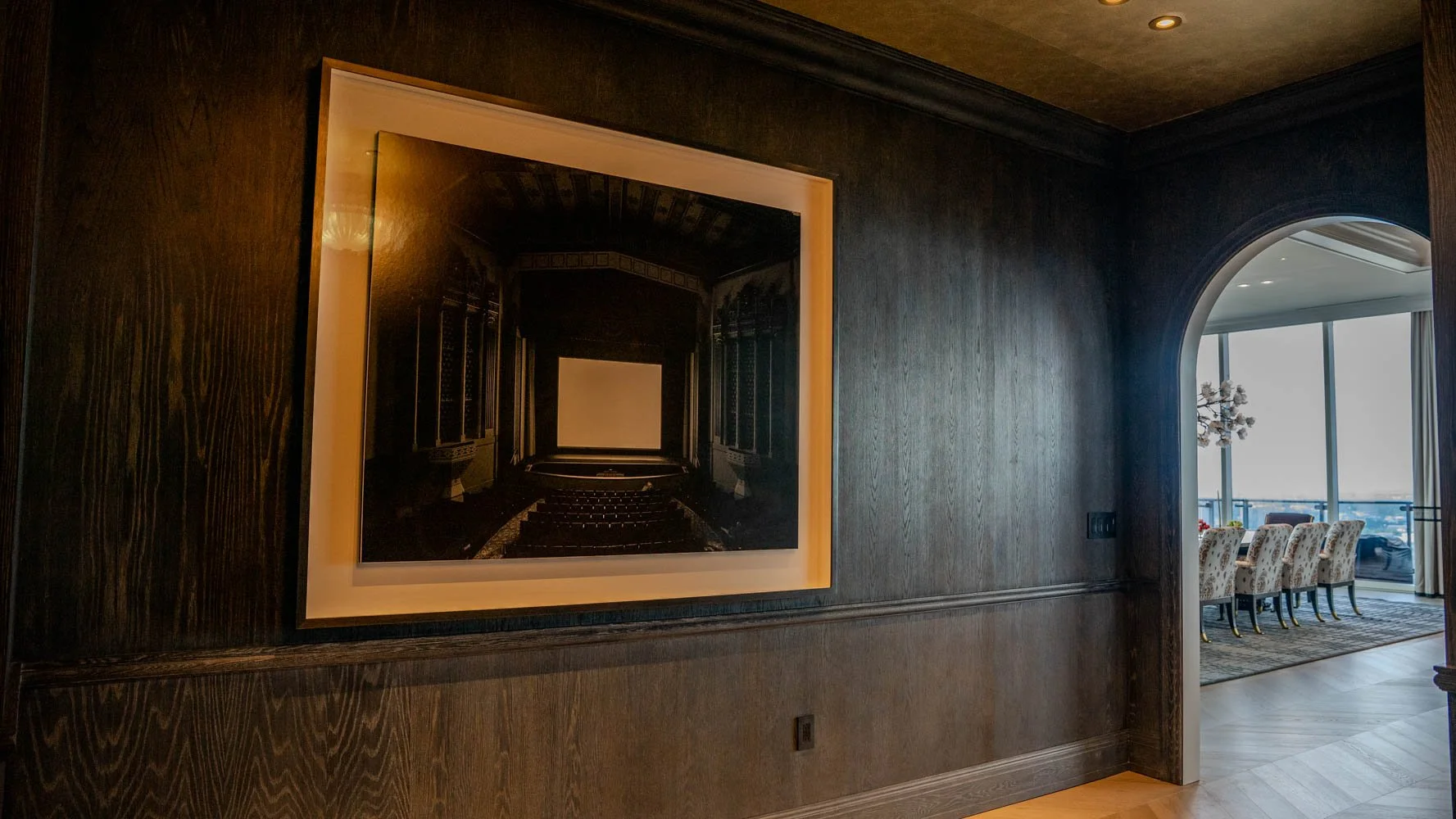
Stanford Theatre, Stanford (1992)
This gelatin silver print is titled Stanford Theatre, Stanford (1992) by Japanese photographer Hiroshi Sugimoto.
It is part of his seminal Theaters series, which he began in the late 1970s to explore the nature of time and space.
The striking white screen in the center is not a blank surface, but rather a long-exposure capture of an entire feature film. Sugimoto places an 8×10 inch view camera at the most distant central spot of the theater. He opens the shutter as the film begins and closes it at the final credits.The accumulated light from roughly 170,000 individual frames compresses an inherently temporal experience into a single, luminous "ghost of every story ever told"
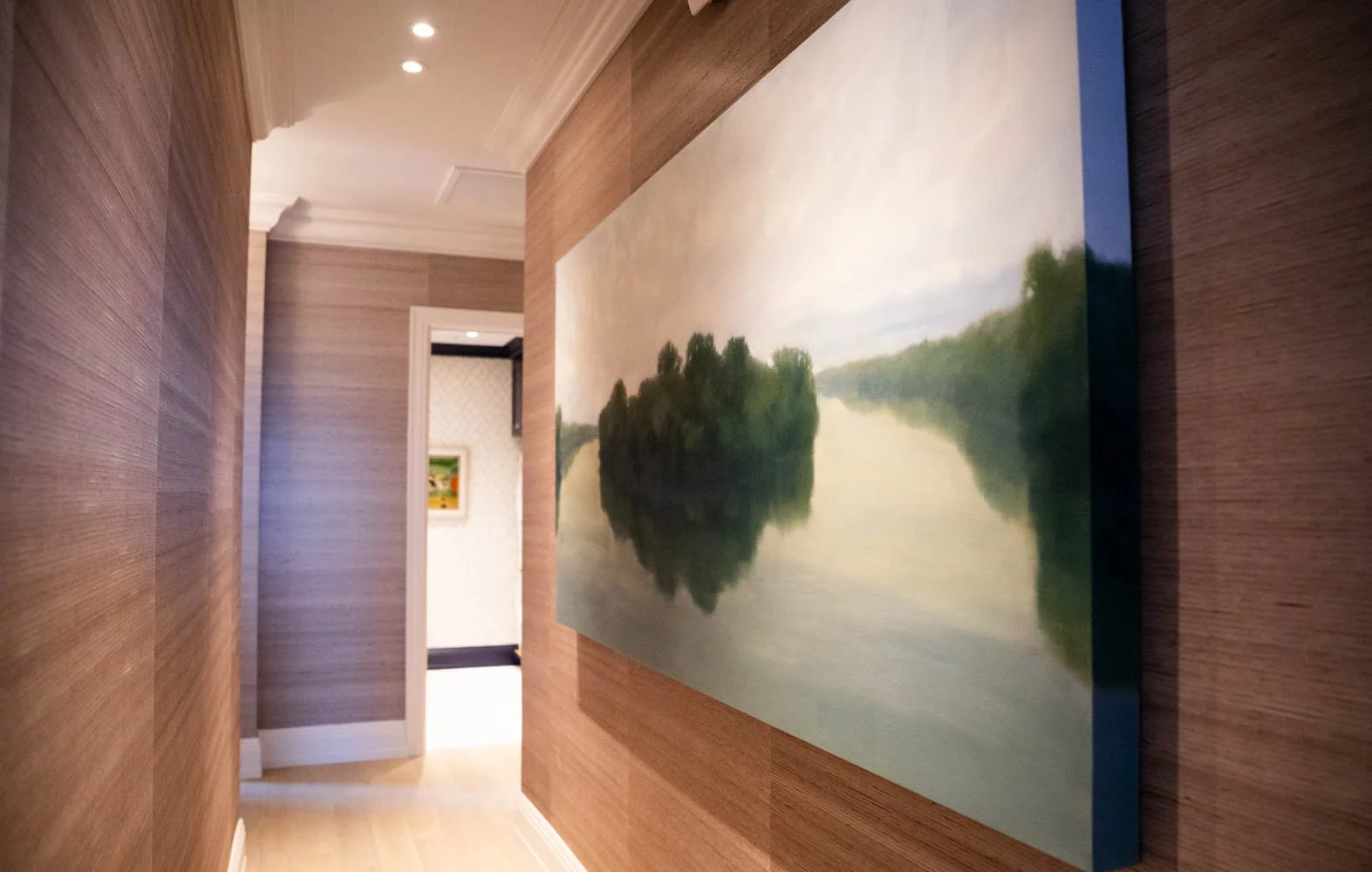
West Fork Bend
"West Fork Bend" by the Nashville-based painter Megan Lightell
It depicts a bend in the West Fork, one of the three forks of the Stones River (a tributary of the Cumberland River) located near Nashville, Tennessee. Lightell utilizes a technique known as tonalism, which involves using a limited palette—often just four colors (red, blue, yellow, and white)—to create misty, atmospheric effects with subtle shades of green and gray.
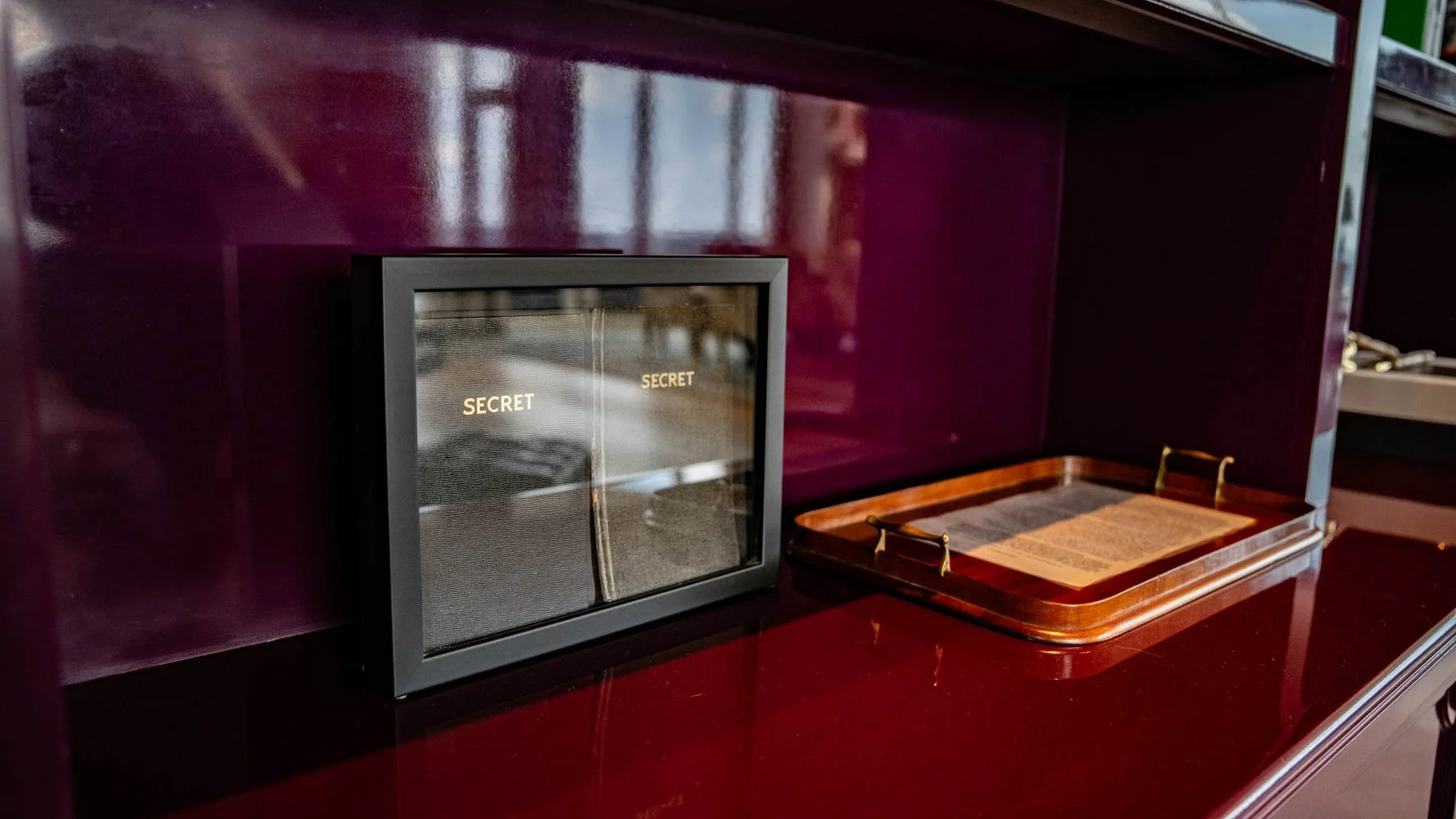
SECRET
SECRET I
By British artist Ian Everard, this piece is part of Everard's "Paintings of Books" series, where he explores the relationship between real objects and their meticulously painted copies.
The work consists of a found book on the left and an exact watercolor painting of that book on the right. Everard uses watercolor with extreme precision to record every detail of the found object, including its unique wear, tear, blemishes, and creases.
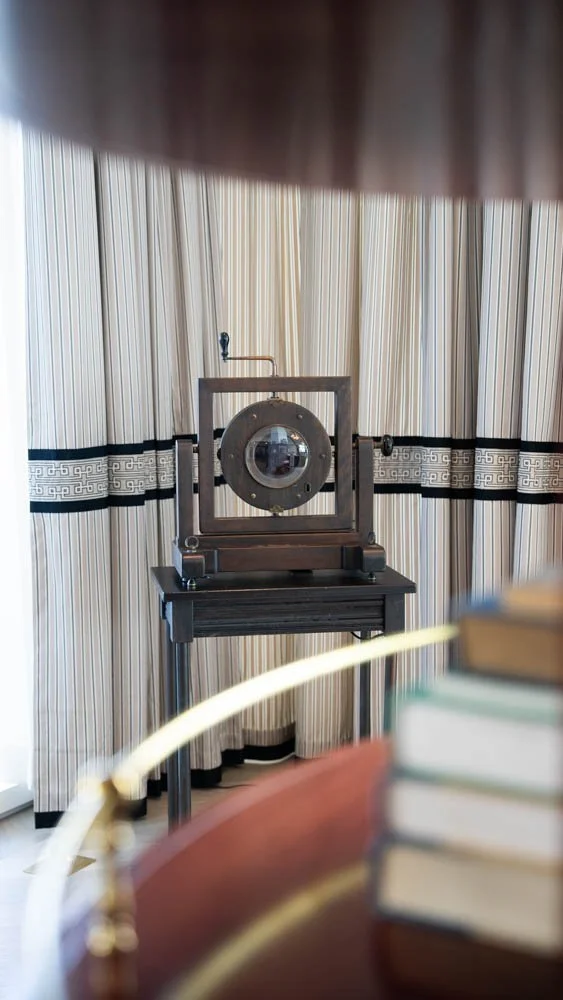
Oculus II
Oculus II (2017) is an installation sculpture by Colorado-based artist and filmmaker Stacey Steers.
This archaic-looking optical device belongs to a series of free-standing objects designed to "mirror key elements" from her animated films, specifically serving as a miniature "screening room" for looped sections of her work.
The piece is a collaboratively fabricated sculptural work made of wood, a digital screen, antique brass, and mixed media. It is often presented on a tall, slender black table, giving it the appearance of a 19th-century scientific instrument. It features an embedded film loop that viewers peer into, much like looking through a keyhole or an early cinematic viewing device.
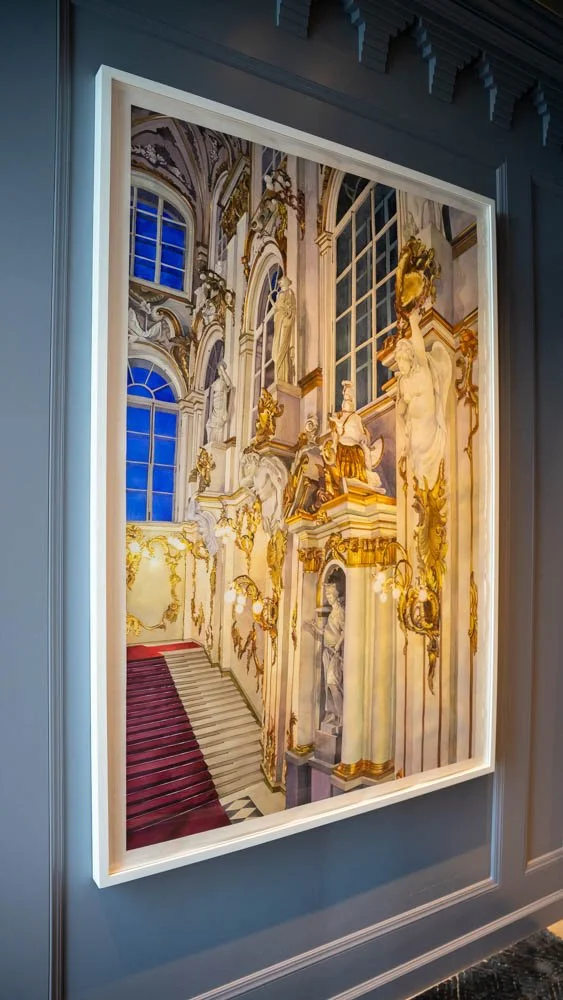
Hermitage I
Hermitage I (2017) is a a watercolor by the multidisciplinary artist Chris Doyle. It depicts the Jordan Staircase (also known as the Ambassadors' Staircase) of the Winter Palace, which is now part of the State Hermitage Museum in Saint Petersburg, Russia.
The Jordan Staircase is a masterpiece of 18th-century Rococo style designed by Bartolomeo Rastrelli. It was used by the Russian imperial family for ceremonies, such as descending to the Neva River for the Blessing of Waters on Epiphany.
Doyle’s painting captures the intricate white marble, extensive gold gilding, and the grand alabaster statues representing virtues such as Justice and Wisdom that characterize this historic space.
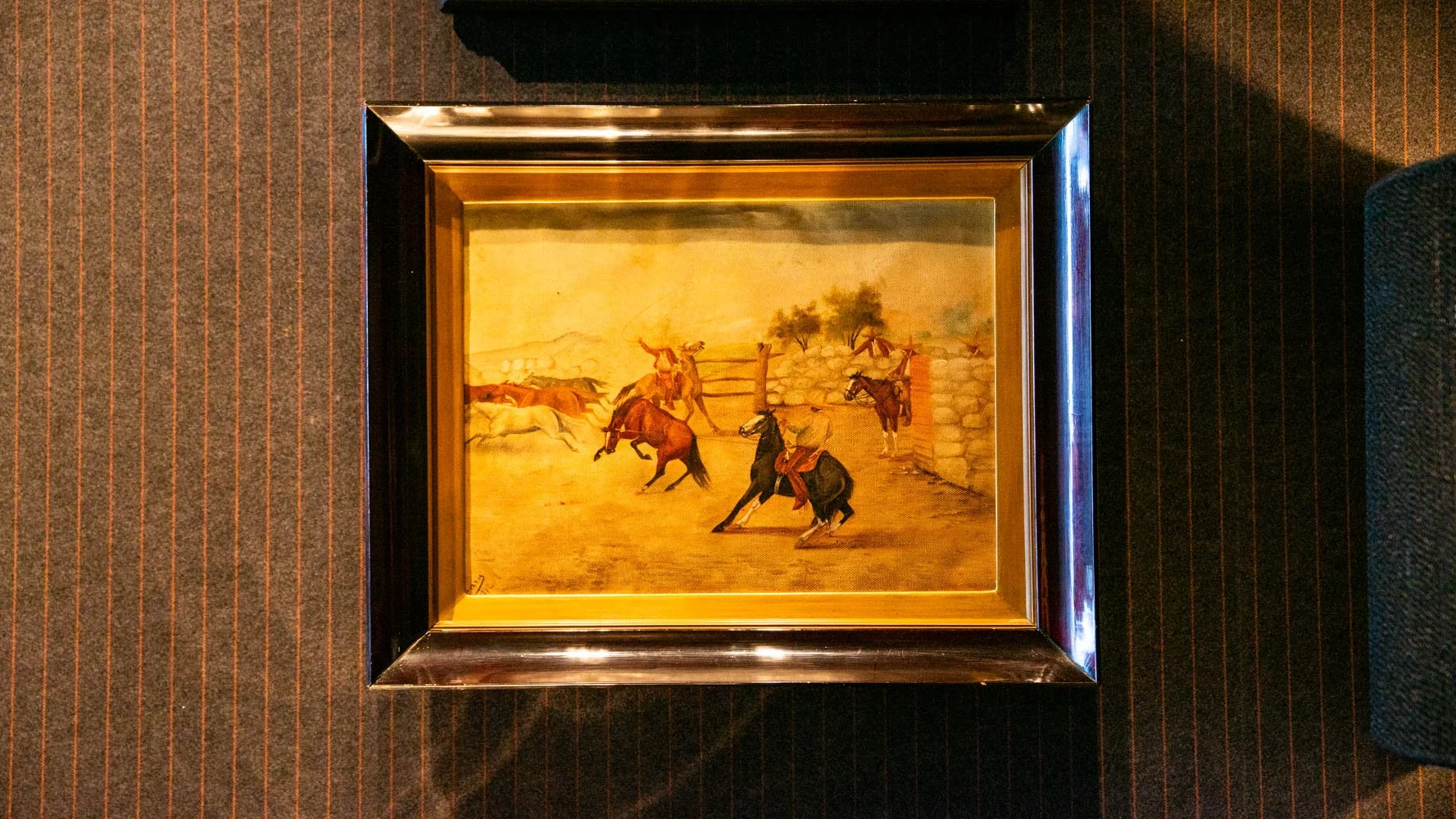
Manganeando a puerta de corral
The painting is titled "Manganeando a puerta de corral" (roughly translated to Lassoing at the Corral Gate or Managing the Corral) by the Mexican artist Ernesto Icaza.
Known for his "naïve" or self-taught style, Icaza focused on authentic depictions of Mexican ranch life and the traditions of charrería. The scene illustrates horse training and lassoing techniques performed by charros at a hacienda.
*This art does not convey with the sale of the residence*
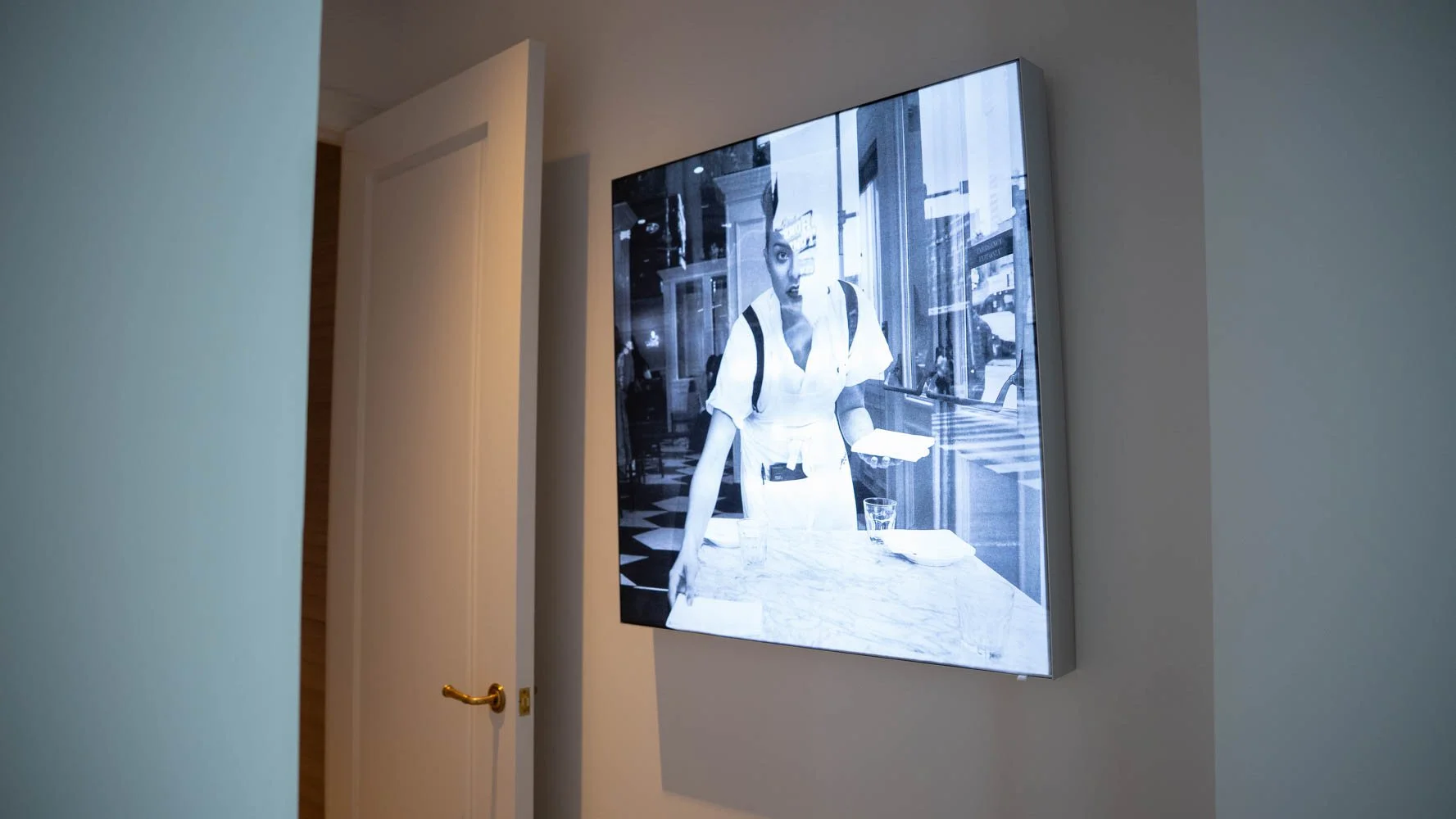
Waitress
A black-and-white photograph by Nashville-based street photographer Michael Ray Nott.
The piece is presented as a large-scale LED Light Box work. Nott's style is characterized by what he calls "civil abstraction," a technique where he captures anonymous lives in urban environments to reveal fleeting narratives and the "hidden pulses" of everyday life.
The photograph documents a candid, spontaneous moment in a public space, capturing the energy and "frank chaos" typical of Nott's Nashville street photography. Nott’s work often explores the "unplanned, unpolished, and often unnoticed moments of everyday life," using the street as a canvas to document contemporary American life
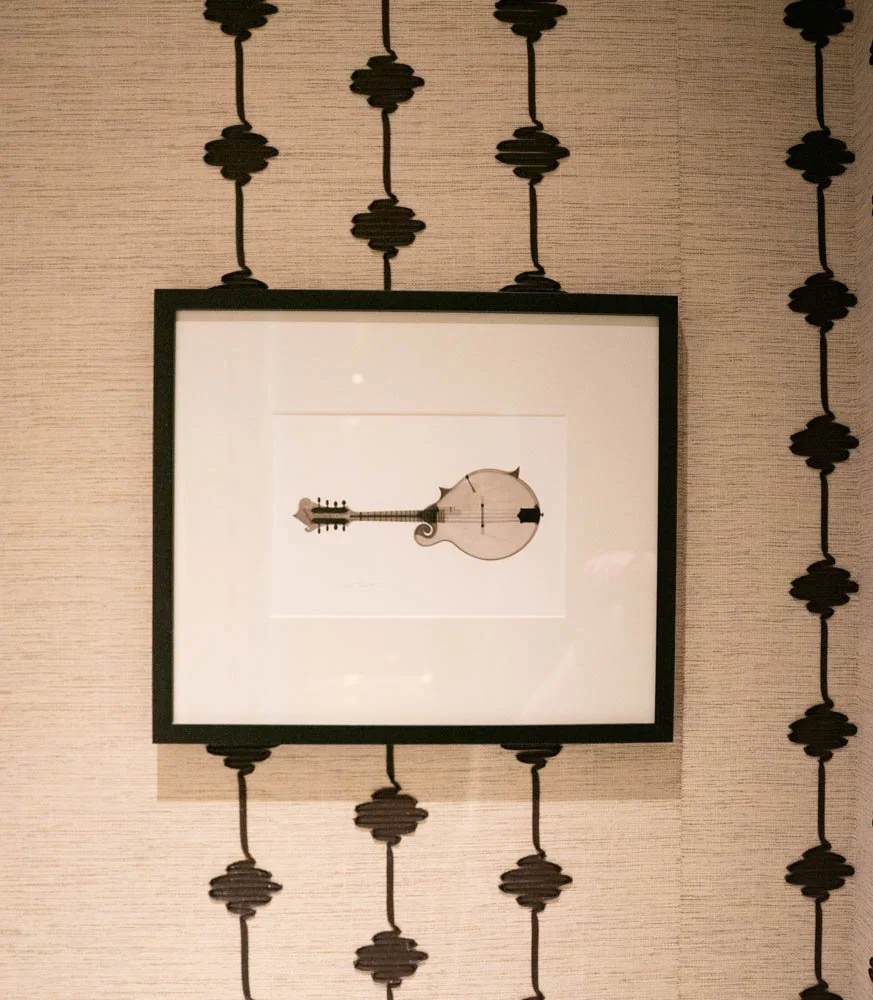
The Mandolin
The image displays an X-ray photograph of a mandolin, created by artist Don Dudenbostel.
Don Dudenbostel is a pioneer in turning radiography into fine art, using X-rays to reveal the hidden "inner beauty" and structures of man-made and natural objects. The work shown is an X-ray Archival Pigment Print that features a mandolin on a monochromatic white background
While the photograph is by Don Dudenbostel, the mandolin itself is often associated with luthier Lynn Dudenbostel of Maryville, TN. Lynn Dudenbostel is a world-renowned builder known for high-quality, handcrafted instruments, particularly his F-5 model mandolins.
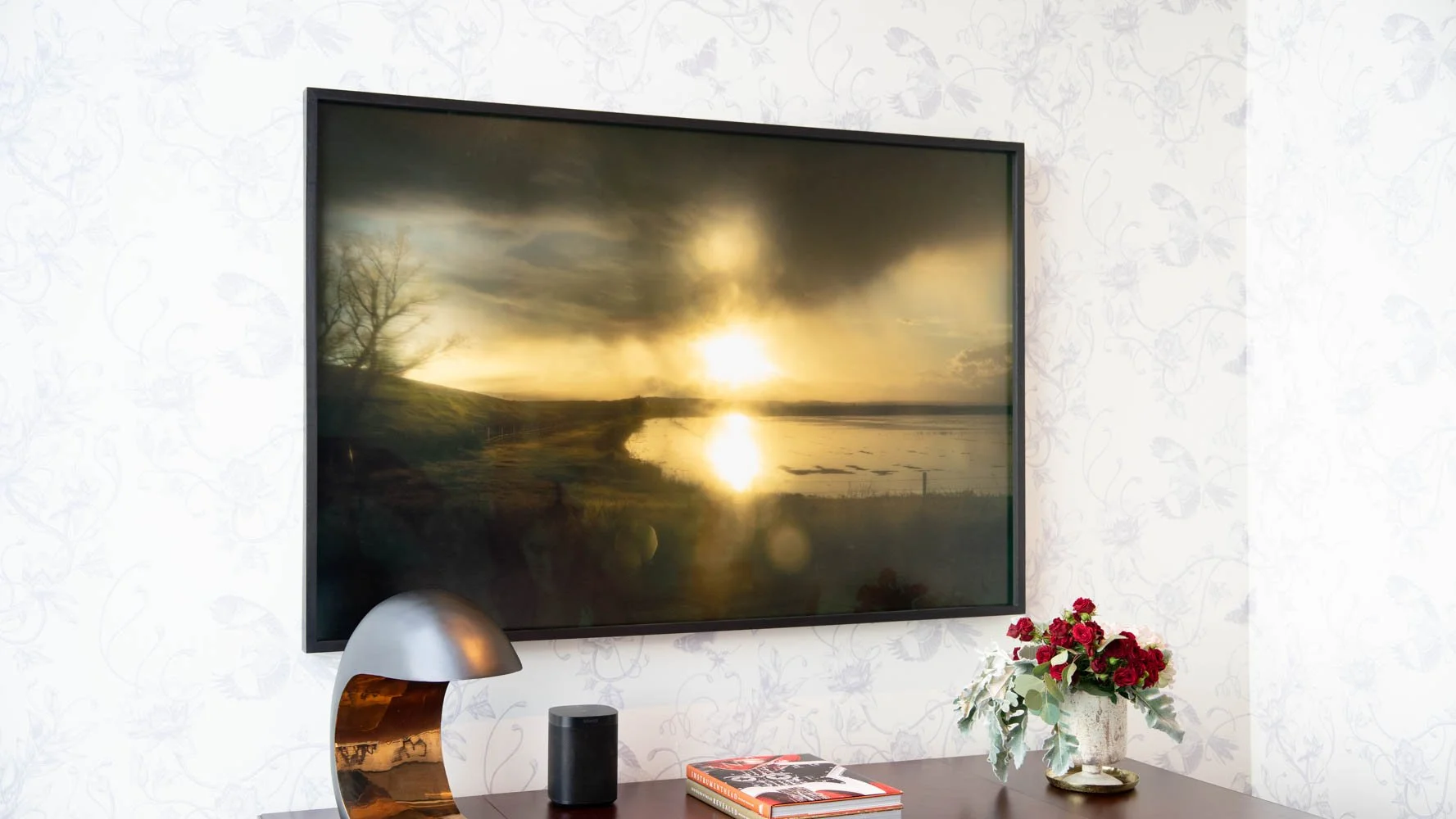
Untitled
The image is a landscape photograph by Todd Hido, identified specifically as "Untitled #12171-2747" (2023). It is part of his most recent series and monograph, The End Sends Advance Warning, published in early 2024
The End Sends Advance Warning is a continuation of Hido’s exploration of moody, mysterious landscapes, following his previous work Bright Black World.
While Hido is famous for documenting American suburbia, this series marks his first significant projects shot outside the U.S., featuring rugged terrains in Hawaii, the Bering Sea, and Nordic fjords above the Arctic Circle.
The series focuses on finding beauty and hope within bleak or "dark" landscapes. Hido describes it as a response to disheartening times, redoubling efforts to note "small and quiet moments of beauty".
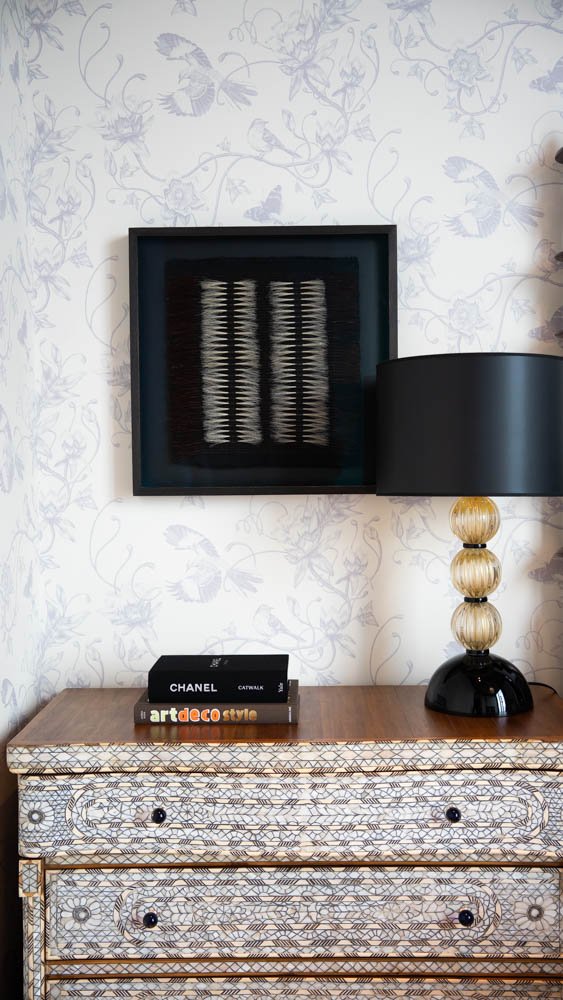
Custom Commission
This piece was custom commission for High Note from artist Alexandra Kohl
Alexandra Kohl, an American fiber artist based in North Salem, New York. Her practice is deeply rooted in her background as an equestrian, using natural horsehair as a primary medium for her minimalist, architectural wall hangings and tapestries.
Kohl primarily weaves with horsehair, linen, and cotton. She often hand-places individual strands of horsehair to create forms that balance precision with organic imperfection. Her work is inspired by minimalism, organic architecture, and the "meditative and healing essence of the equine spirit"
Many of her pieces utilize hair from rescued and rehabilitated horses at Our Farm in North Salem, NY. She also creates custom commissions for riders using hair from their own horses' manes or tails.
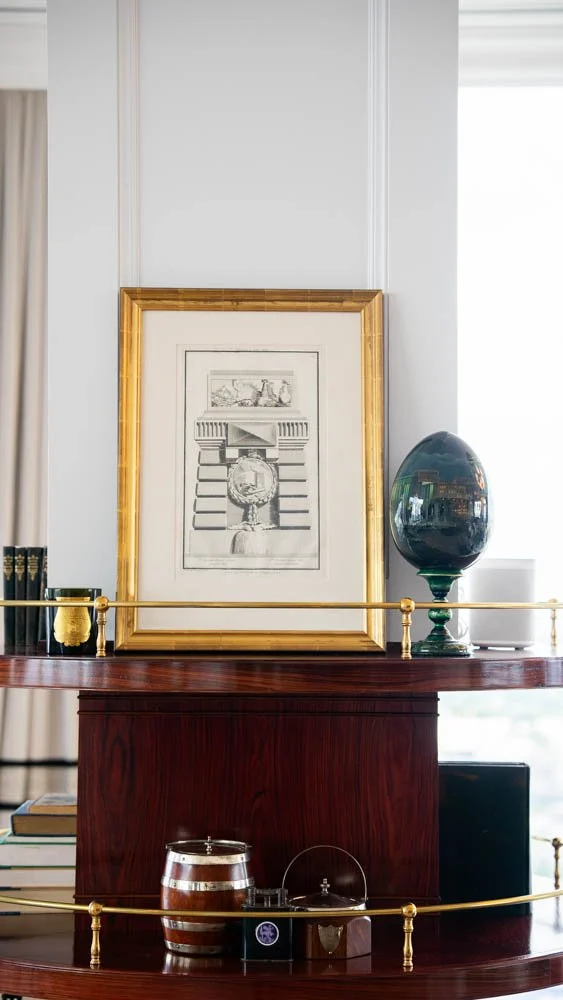
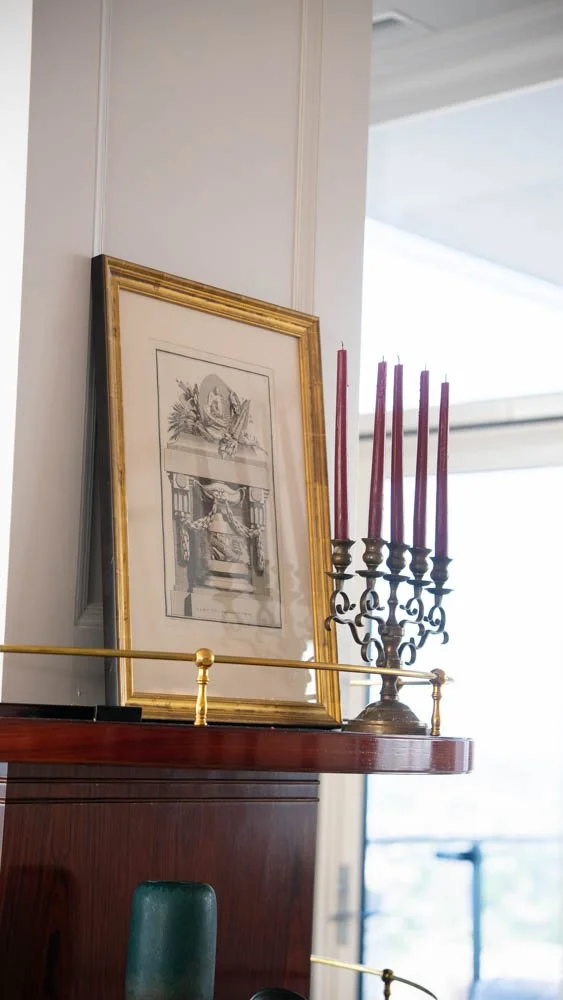
Design Study for a Neoclassical Rusticated Pedestal 1 & 2
A 1768 etchings titled "Design Study for a Neoclassical Rusticated Pedestal" by the French architect and designer Jean-Charles Delafosse (1734–1789).
Jean-Charles Delafosse, a prominent Parisian architect and designer influential in the development of the goût grec (Greek style), an early form of neoclassicism.
The etching depicts a design for a rusticated pedestal or monument, featuring heavy stonework (rustication), a central circular medallion or plaque, and an ornate trophy-like arrangement at the top.
Delafosse was known for his extensive series of ornamental designs, such as those found in his Nouvelle Iconologie Historique (New Historical Iconology), published around 1768–1771.
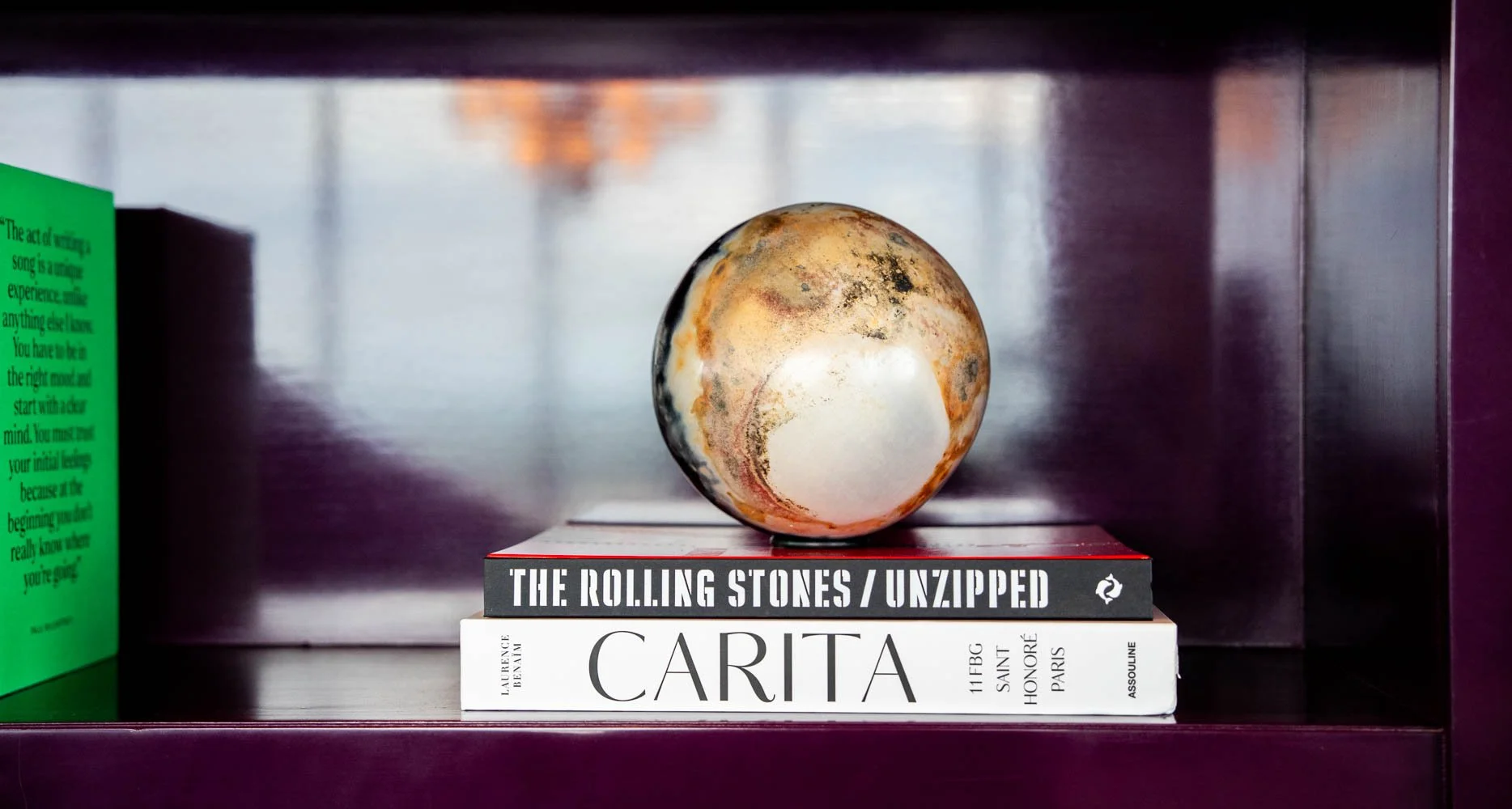
Pitfire Ball
The "Pitfire Ball" (1993) created by American ceramic artist David Kuraoka.
Wheel-thrown and hand-altered stoneware. Burnished and pit-fired with a palette including black, white, orange, and red.
Kuraoka uses an open fire pit process, reminiscent of indigenous American methods, where the piece is in direct contact with smoke and flames. He often incorporates rock salt and copper carbonate to achieve warm, smoky, swirling designs
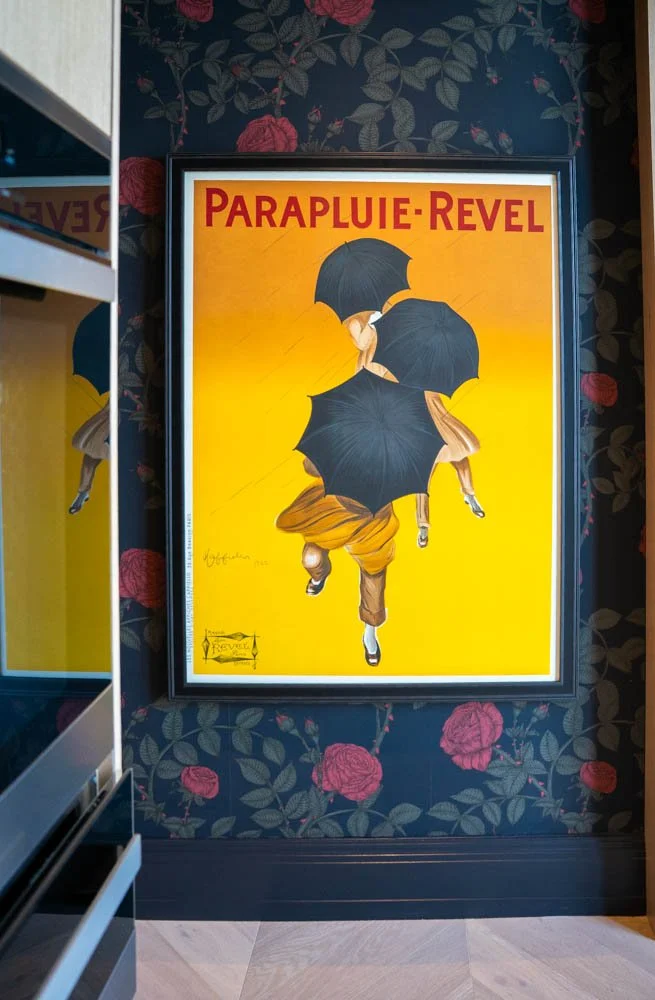
Parapluie-Revel
Leonetto Cappiello Vintage 1998 Offset Lithograph Print French Poster "Parapluie-Revel" 1922.
This is a famous 1922 art deco advertisement poster created by Leonetto Cappiello.
The image features a striking design of people holding black umbrellas against a vibrant yellow and orange background.It advertises a former leading French brand of umbrellas and is a well-known piece of vintage advertising art.
Ceci n'est pas une Pipe
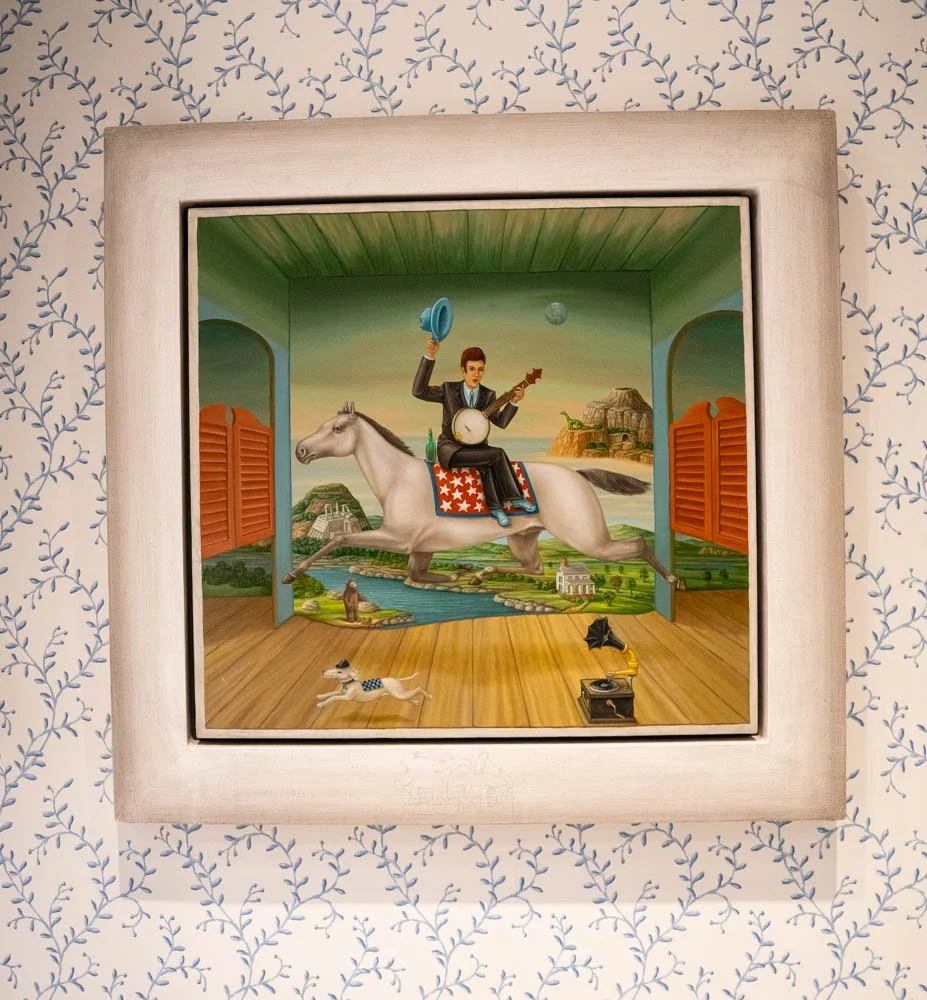
Passing Through Time and Space
The painting in the image is titled "Passing Through Time and Space" (or simply "Passing Through") by Atlanta-based artist Charles Keiger.
Charles Keiger is known for creating "southern gothic" and magical realism paintings that blend real-world elements—such as animals, people, and landscapes—into surreal and often humorous atmospheres. He has stated that his goal is to elicit wonder or a smile from the viewer without them needing to "figure out" a definitive meaning.
This artwork is a mixed-media piece titled "Blue Bird" (or featuring an Eastern Bluebird) by contemporary artist Carlos Gamez de Francisco.
Gamez de Francisco's work is characterized by "figurative surrealism," often merging historical grandeur with contemporary symbols to create "illusory worlds".
Influenced by his Cuban upbringing, his art often deconstructs traditional notions of power and wealth seen in Renaissance and Baroque portraiture.